As a kid, I never really knew what I was passionate about. I loved creating things out of Legos, but I never thought much about taking it further. Then I got into robotics, and for the first time I found something that let me build, experiment, and solve problems in a way that genuinely excited me.
Since then, I've found myself drawn to projects where I can start with a rough idea, build something, see what works, research it, and improve it from there. I enjoy the process just as much as the final result, especially when a project brings together different areas of engineering.
My interests sit between robotics, mechatronics, software, hardware, embedded systems, CAD, electronics, network engineering, cybersecurity, and AI / computer vision.
Currently interested in
Whatever sparks my curiosity
02 / Education
Still learning
Current
Toronto Metropolitan University
Bachelor of Engineering in Mechatronics Engineering (Honours)
03 / Skills
Things I have used
Programming
Python · C++ · C# · Java · JavaScript · TypeScript · Swift · Shell · Lua · CMake · Rust · HTML / CSS · Django
Fusion 360 · Blender · CAD · Onshape · Prusa · Powder Bed Fusion (PBF) · Metal / wood CNC · 3D modeling · Prototyping · 3D printing
Robotics / Embedded
Microcontrollers · Sensors · Serial communication · Automation · Control systems
AI / Computer Vision
Computer vision · Machine learning · LLMs · Vector search · Local AI
04 / Selected work
Projects
A collection of things I've built, designed, and experimented with.
ChangeMe — GPS/FindMy spoofing
A systems investigation into Apple’s Find My and location stack — reverse engineering, protocol analysis, trust boundaries, and what a client can present versus what a platform will actually trust.
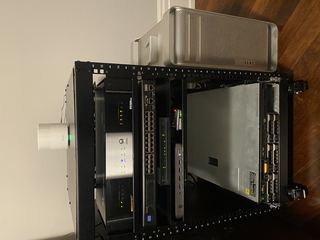
A personal infrastructure lab for designing, deploying, breaking, and rebuilding real networking and compute — OPNsense, Linux, DNS, self-hosting, and systems troubleshooting.
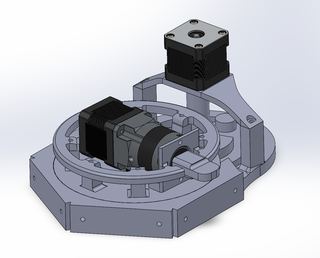
Mechanical design of a multi-position fluid-transfer system — peristaltic pumping, Geneva indexing, and NEMA stepper integration refined through iterative CAD.
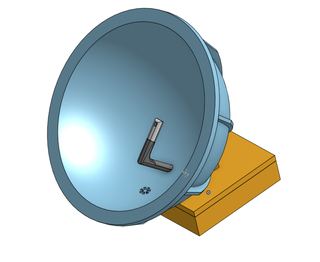
A directional parabolic acoustic sensing system for isolating and classifying sounds — mechanical CAD, custom electronics, and local AI inference for drone signature detection.
Worked across defence-system-based UAV production and product R&D in a Waterloo startup building AI-enabled aircraft systems — assembling platforms from components and subassemblies, integrating flight controllers and ArduPilot-based flight stacks, and bringing up electronics through calibration, parameter configuration, and failure diagnosis. Contributed to iterative mechanical and systems design for manufacturability and reliability, and helped develop experimental sensing hardware including a parabolic acoustic sensor with custom electronics and on-device AI for drone-acoustic classification.
Project Manager / Mechanical Design Engineer · Toronto, ON
Leading mechanical design for a Mars rover developed for URC, working in SolidWorks from concept through production-ready CAD, drawings, and BOMs — cutting iteration time by 2.7× by catching interference early. Collaborating across mechanical, electrical, and software subsystems on mounts, connectors, clearances, and integration, then validating builds through fit, strength, and reliability testing and resolving 5+ issues per design cycle with structured troubleshooting.
SolidWorksCADMechanical DesignSystems Integration
Aug 2024 – Jun 2025
Intellibots — FTC 27076
Team Captain · Mississauga, ON
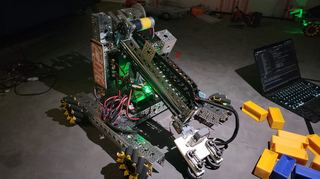
Led a 6-member mechanical and software team through a first-season push toward World Championship qualification in Mexico, earning Judges and Motivation Awards. Directed robot design, prototyping, and testing across a 41-week season — raising match reliability to 60% through structured validation — while managing roles, timelines, $2,400+ in sponsorships, and procurement within a $1,000 budget.
Mentoring 13+ students through the path from early concepts to robust competition mechanisms, with CAD feedback, hands-on building, and mechanical iteration along the way. Running 5+ debugging and validation sessions focused on planning, on-field reliability, and cutting recurring mechanical failures by 73%.